His last book was based on great deal of study and research to answer many of the common questions that arises, as his article from Yoga Journal also addressed in brevity:
“It’s often said that yoga is a 5000 year old tradition from India. In some respects this is true. But what about the practices we do today? Is there really a direct link to the ancient past, or is the story more complicated? Today yoga is virtually synonymous in the West with the practice of āsana. And yet, in spite of the immense popularity of yoga worldwide, there is little evidence that āsana has ever been the primary aspect of any Indian yoga practice tradition—including the medieval, body-oriented haṭha yoga. How did this strange situation come about? What can we learn from the modern history of āsana? And what does it mean for our practice today?”
His profile for the latest teaching engagement reads:
“Mark Singleton has a Ph.D in Divinity from Cambridge University. He has published extensively on modern yoga, including the first collection of scholarship on the topic, Yoga in the Modern World (2008), and the ground-breaking study of the modern history of āsana, Yoga Body, The Origins of Modern Posture Practice. He is a yoga teacher in the Iyengar and Satyananda traditions. His opinions on yoga have appeared (among other places) in the New York Times and Yoga Journal.”
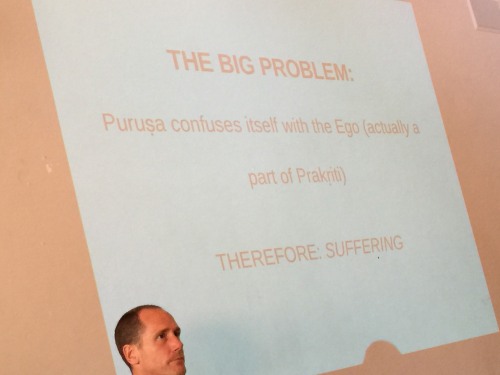 We all have this problem… what Judith calls our “humanness” …
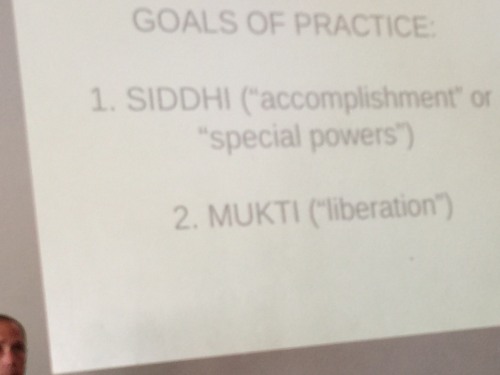
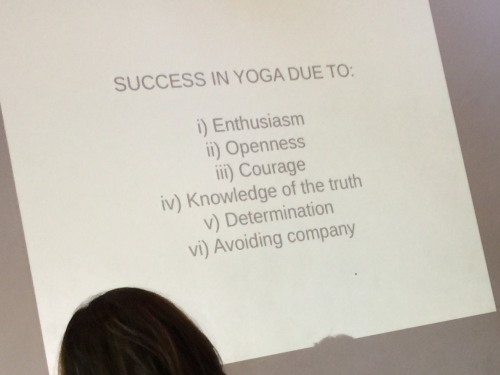
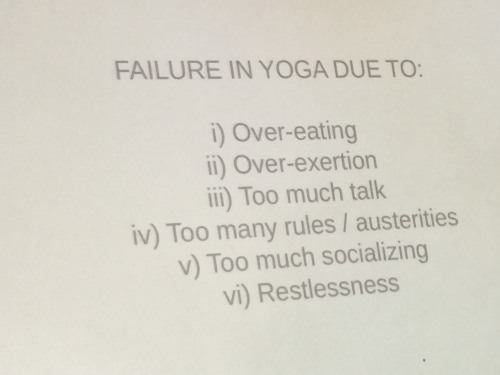 We all learn from our failures:) Then, we have successes – moments that sparkle – the light, the freedom, the expansiveness…
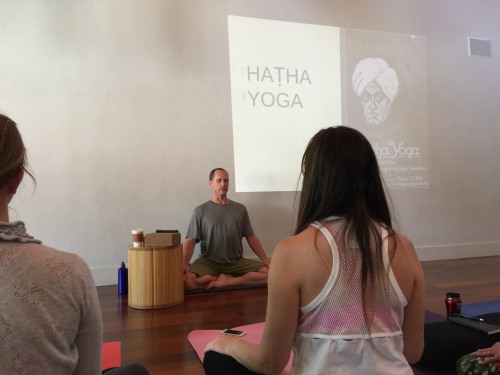
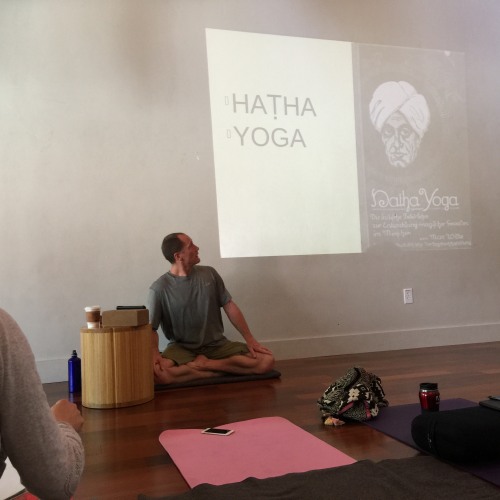
Mark Singleton, Ph.D, Sanskrit and yoga philosophy scholar, and author of the highly-acclaimed book, “Yoga Body: The Origins of the Modern Posture Practice” was in town (“passing through” was words used to describe his rare, and therefore much prized stop-over visit) for a teaching engagement at a premier yoga studio in Silicon Valley … I was in the midst of still trying to finish 4-5 yoga books, so I was hardly ready for yet another … yogi author about yoga that’s flooded the bookshelves from every teacher training, intensives, yoga festival or workshops I had gone to but … highly recommended by Richard Rosen … SO somehow made it to only half of his 4-days sessions (missed Sanskrit pronunciation crash course! iSAD…Yes, admittedly, I’m a ‘geek’yogini).
Soooo telling the state of the world …when Mark made a remark, “it’s interesting that Sanskrit scholars tends to be men and it’s a very male dominated world.” That statement certainly got everyone’s attention as the students were mostly … women. The immediate response raised were: “THAT’S because women are actually BUSY!” front row yogini blurted out. Rallying around her with rolled eyes more commented, “We are after all the ones taking care of things!”; “We don’t have time to be studying Sanskrit if we wanted to !” It was a riot – just kidding – we are all peace loving yoga aficionados. (Although the lady next to me does not yoga – but wished she could so I was asked where I teach but too far to commute she realizes – for Mark’s class, she says she made the long trip because she wanted to deepen her studies in the Yoga Sutras of Patanjali…in Sanskrit. I was so impressed with her enthusiasm – she may have been in her 60-70’s? but had the zeal to learn of a college freshman, as they say “bright eyed and bushy tailed”? Adorably cute…with bright eyes, she eagerly took down the name of a book I was reading – it’s about psoas muscles? Really ? You really want to read this too? I had to repeatedly ask her as she copied down the name of my book…??? from me. She is one curious being.)
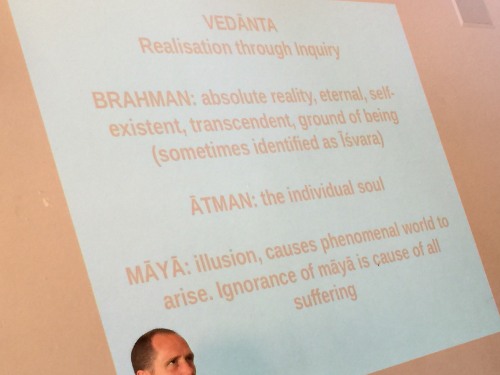
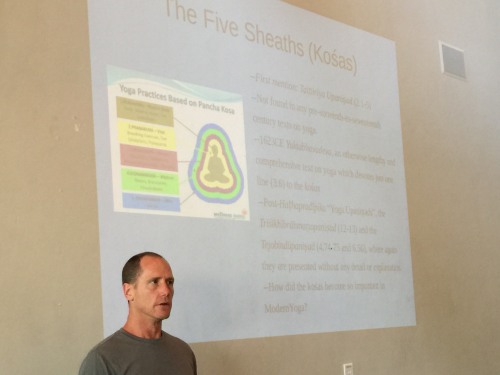
Here’s a sampling of past reviews from his previous “controversial” book, “The Origins of the Modern Postures Practice”. He is rumored to be working on a new book and if this ‘lecture’ (yes, he’s a professor yogi) was any indication of what’s to come, it is sure to be riveting for anyone interested in deepening their study and practice of yoga. The studio was packed with some students traveling from afar just for the opportunity to study under him…a true yogi, someone who has dedicated his life to this endless study. So I was honored to be granted the permission to post some of the power points from the most illuminating presentation – it’s just scratching the surface of what’s so deep and intellectually eye-opening. Here’s some of the remarks from the past reviews:
“[Mark Singleton’s Yoga Body] should be on the reading list of every serious student and teacher training program.”
– Richard Rosen, Yoga Journal
“Mark Singleton is one of the most valuable, vocal and articulate advocates for yoga practitioners and yoga scholars to put aside their differences and engage the questions that bear upon their shared interests. His writing and teaching provide a bridge between the concerns of academia and those of practice…
[His book is] the best effort yet to free yoga from fundamentalism…I recommend Mark Singleton’s Yoga Body with enormous gratitude and equal enthusiasm.”
– Susan Maier-Moul, Editor, The Magazine of Yoga
“From the moment I started reading Mark Singleton’s Yoga Body I couldn’t put it down. It is beautifully written, extensively researched, and full of fascinating information. It stands alone in its depth of insight into a subject which has intrigued me for forty years.”
– David Williams, Maui, Hawaii. The first non-Indian to learn the complete Ashtanga Vinyasa Yoga syllabus.
“His work offers a much needed historical perspective that will help correct much of the mythology and group-think that is emerging in the modern āsana based ‘yoga world’. Any serious āsana practitioner who wishes to understand the place of āsana in the greater tradition of yoga will do well to read it carefully.”
– Gary Kraftsow, the founder of the American Viniyoga Institute, author of Yoga for Wellness and Yoga for Transformation.
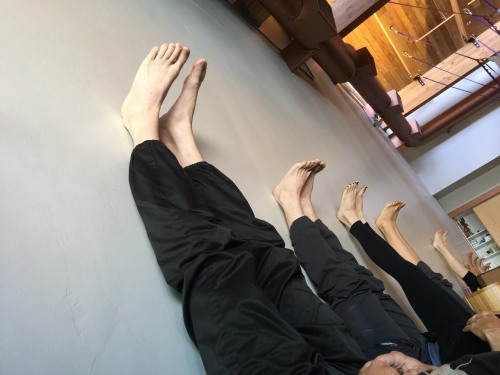 It wasn’t all lectures and talks – we practiced together:) Yoga today is from much innovation, as much from natural evolution.
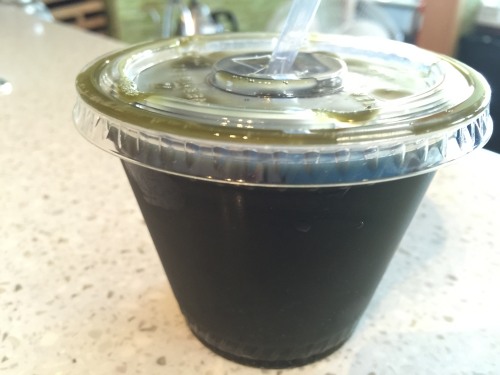 My late late lunch… sooo green … deep green. It’s not your ordinary “green” smoothie.
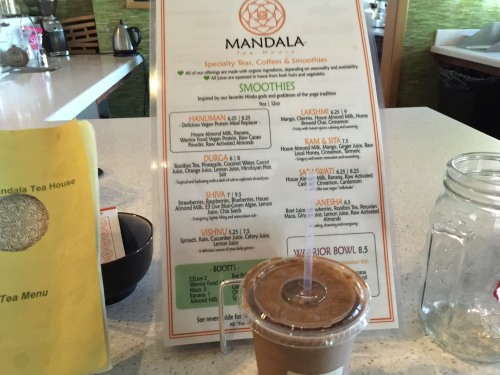 Basically this was my … dinner, smoothie full of cacao (raw chocolates!)…heavenly Hanuman smoothie, named after a pose, “Hanuman” to its perfect form has been eluding me (block use is so helpful) but … that’s how my femur bones are plugged into my hip sockets – so please everyone, no straining and powering through the pain – ease up – these poses are just … poses. The full expression, the full intensity to reach millimeter at a time. Let’s enjoy the process; the journey and not let the ego cause more suffering; suffering, we are learning to live with grace and courage, through the practice of … yoga.
Here are some additional books to fill my bookshelves… all good:) Knowledge is only good when used for good purpose. That is my intention…