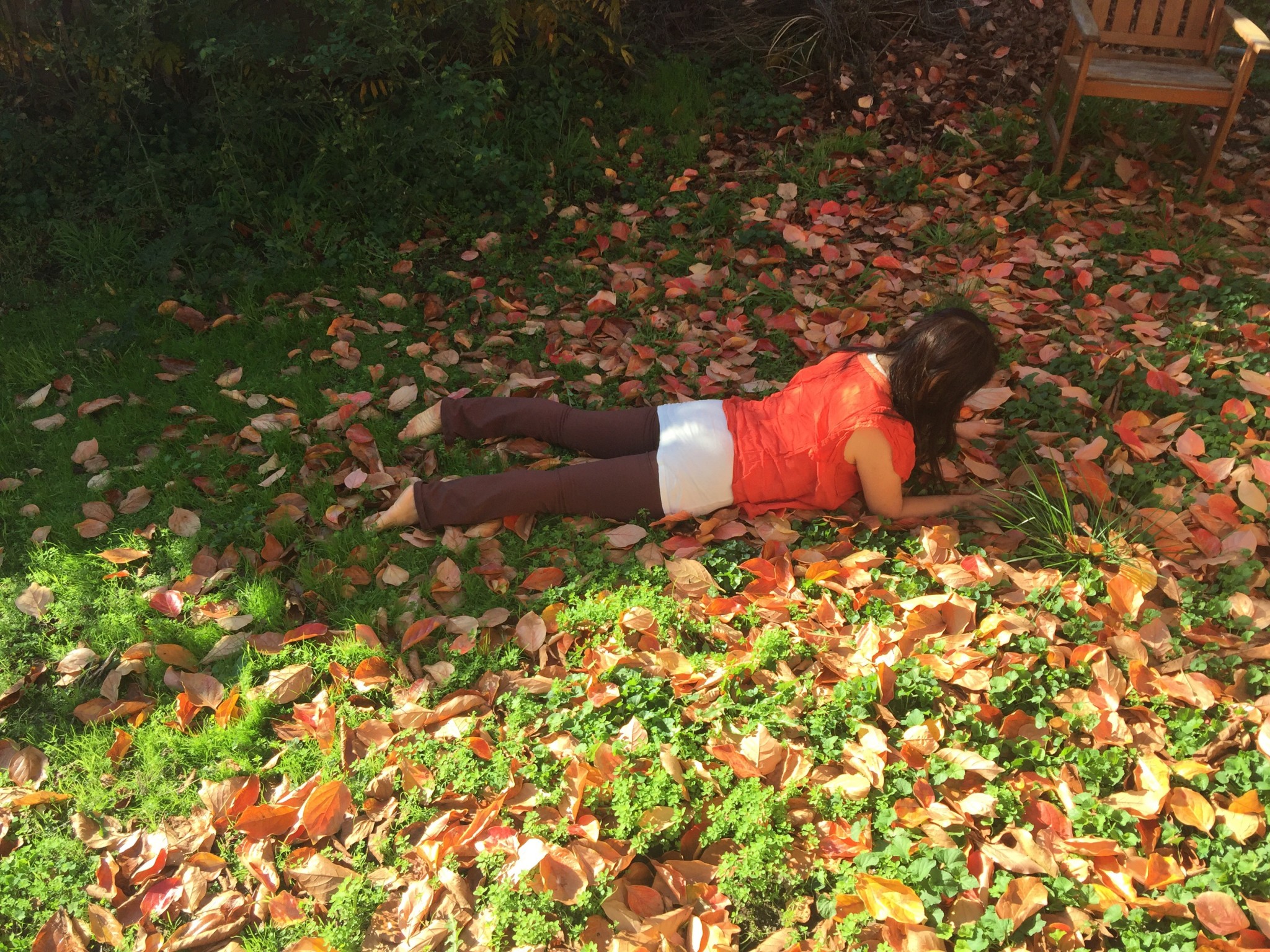
Gentle start with Sphinx. Smell the earthy musty leaves and grass. So grounding.
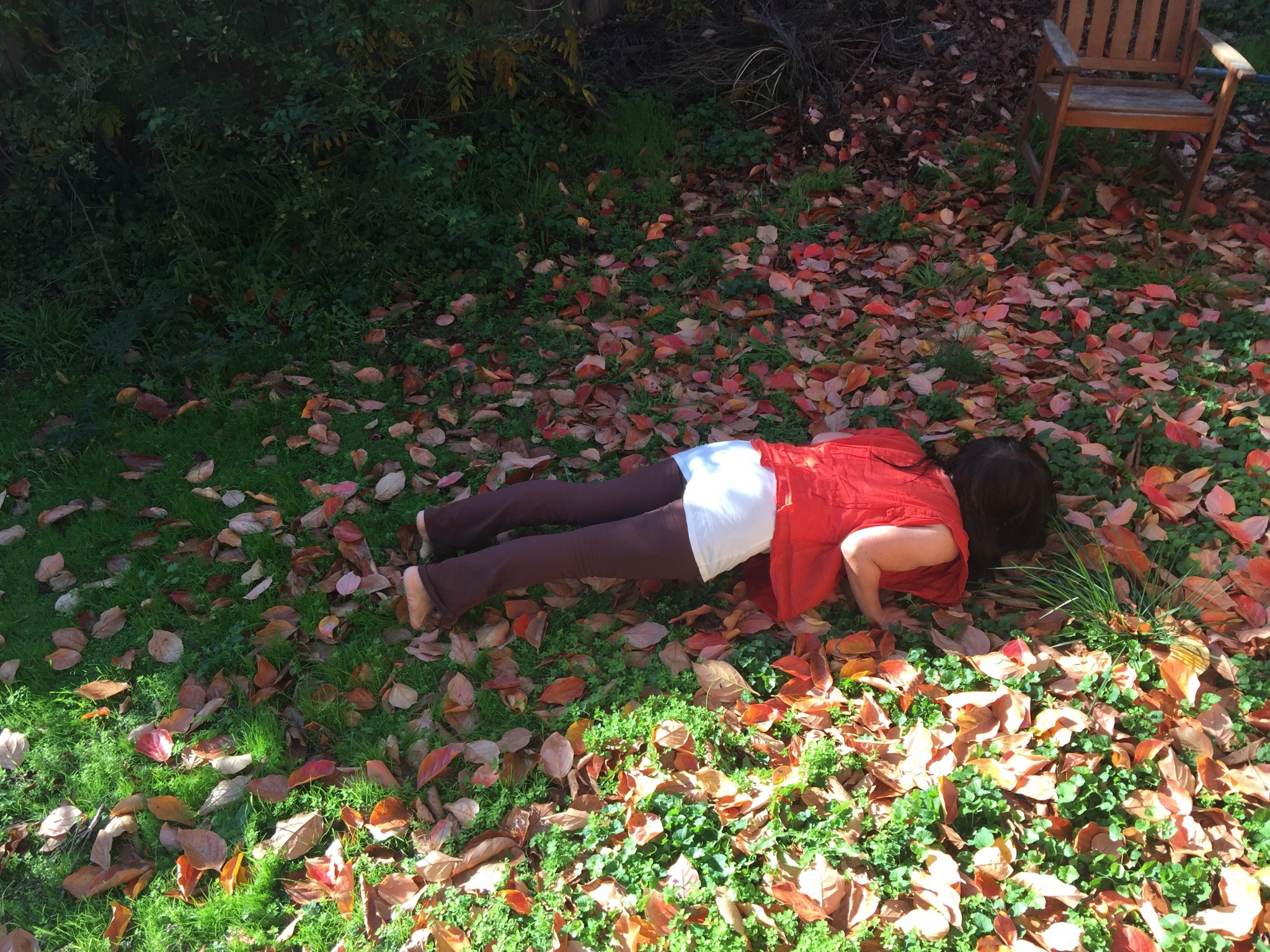
Hovering nose over the fallen leaves on the ground Flex your feet, on your toes, yogic push up where you are not pushing. Rather the opposite – from plank SLOWLY lower to where your upper arms are parallel to the ground with elbows not flung out but by your sides to protect the shoulder girdle; resist sagging the middle while not bumping up the buttocks – need the upper body strengths that I lack from fear of hurting my wrists again.
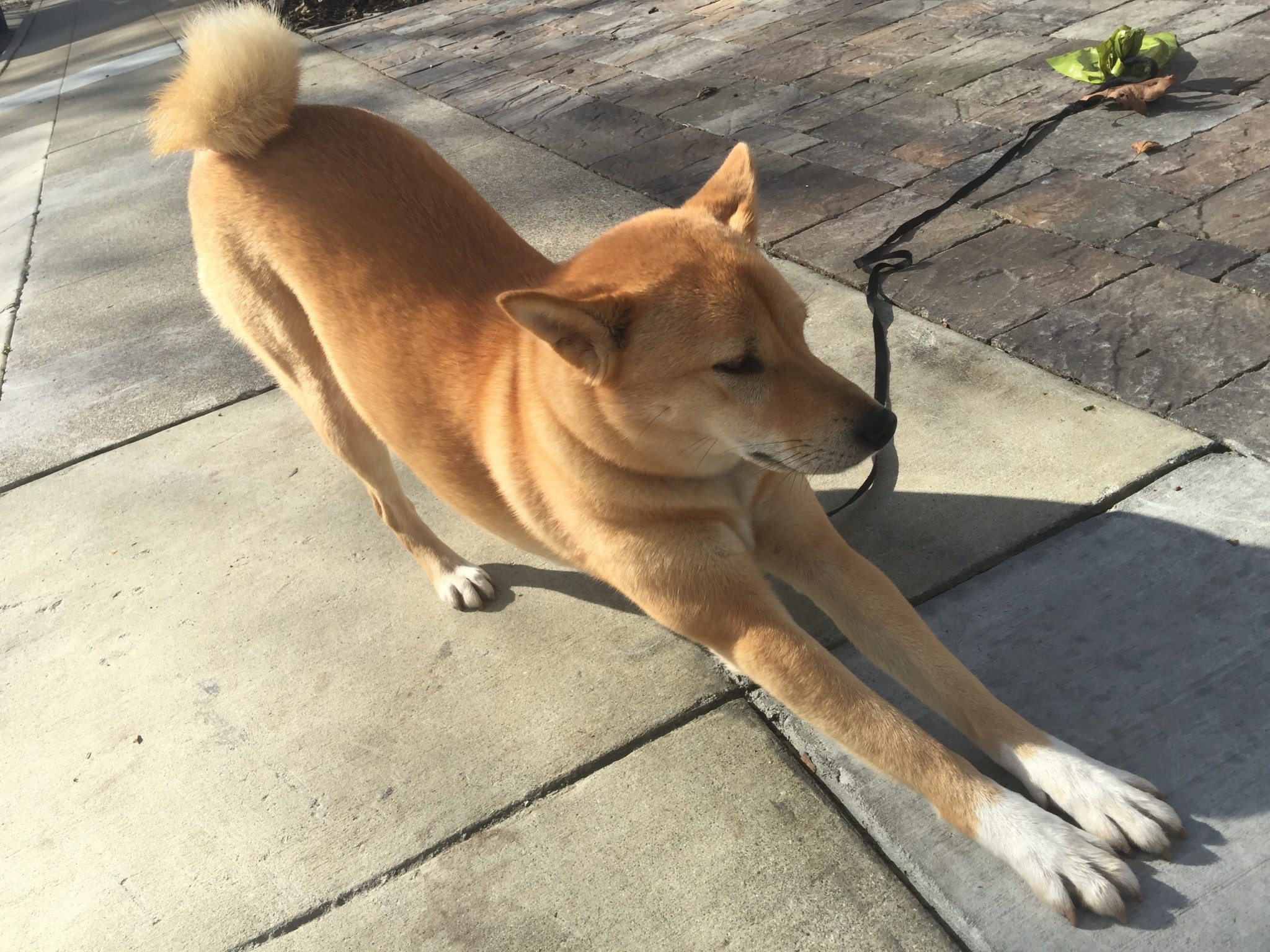
Ehh where’s the down dog pic? This from an earlier walk will have to fill in.
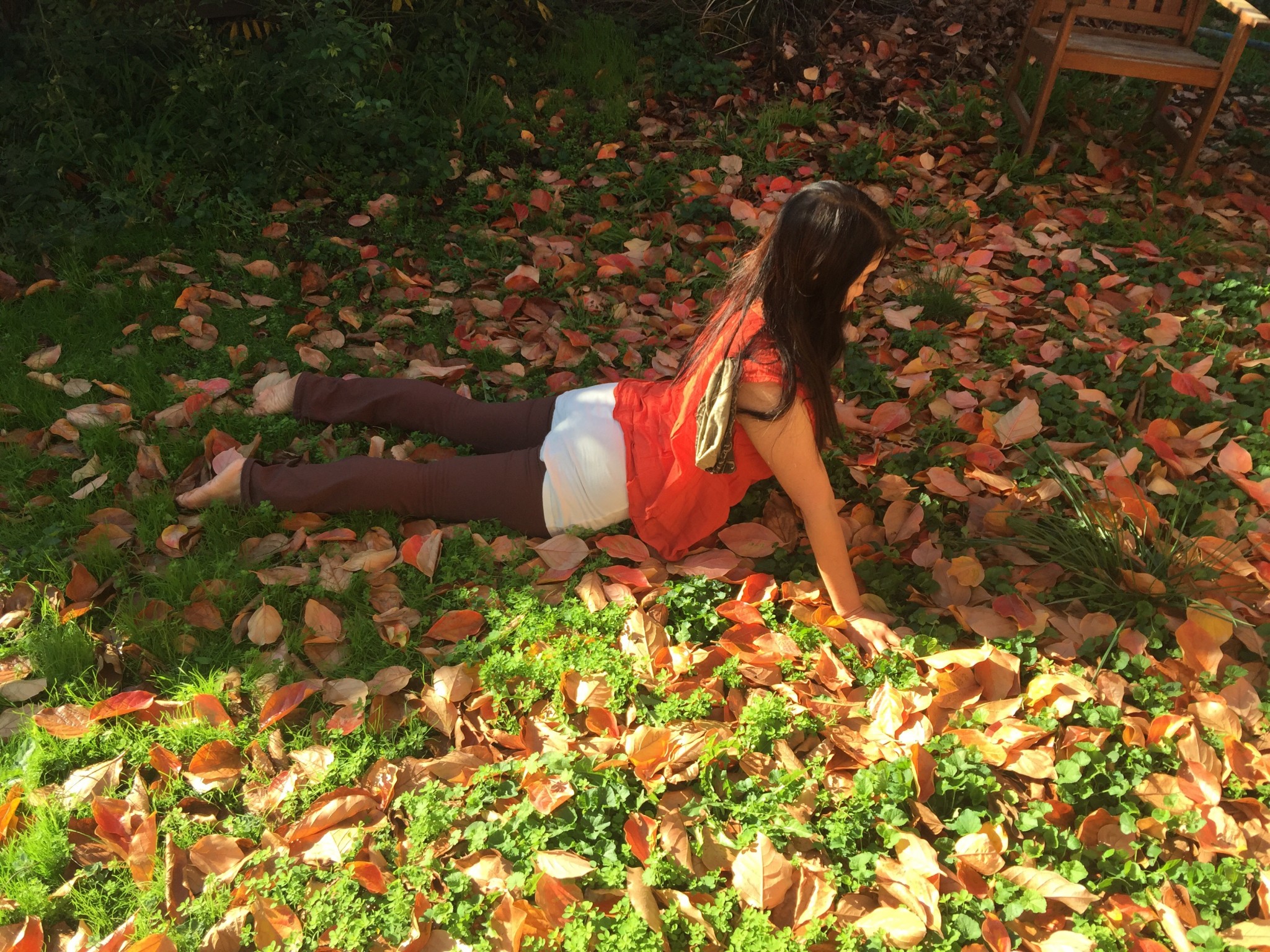
So much for my hair band…now Seal.
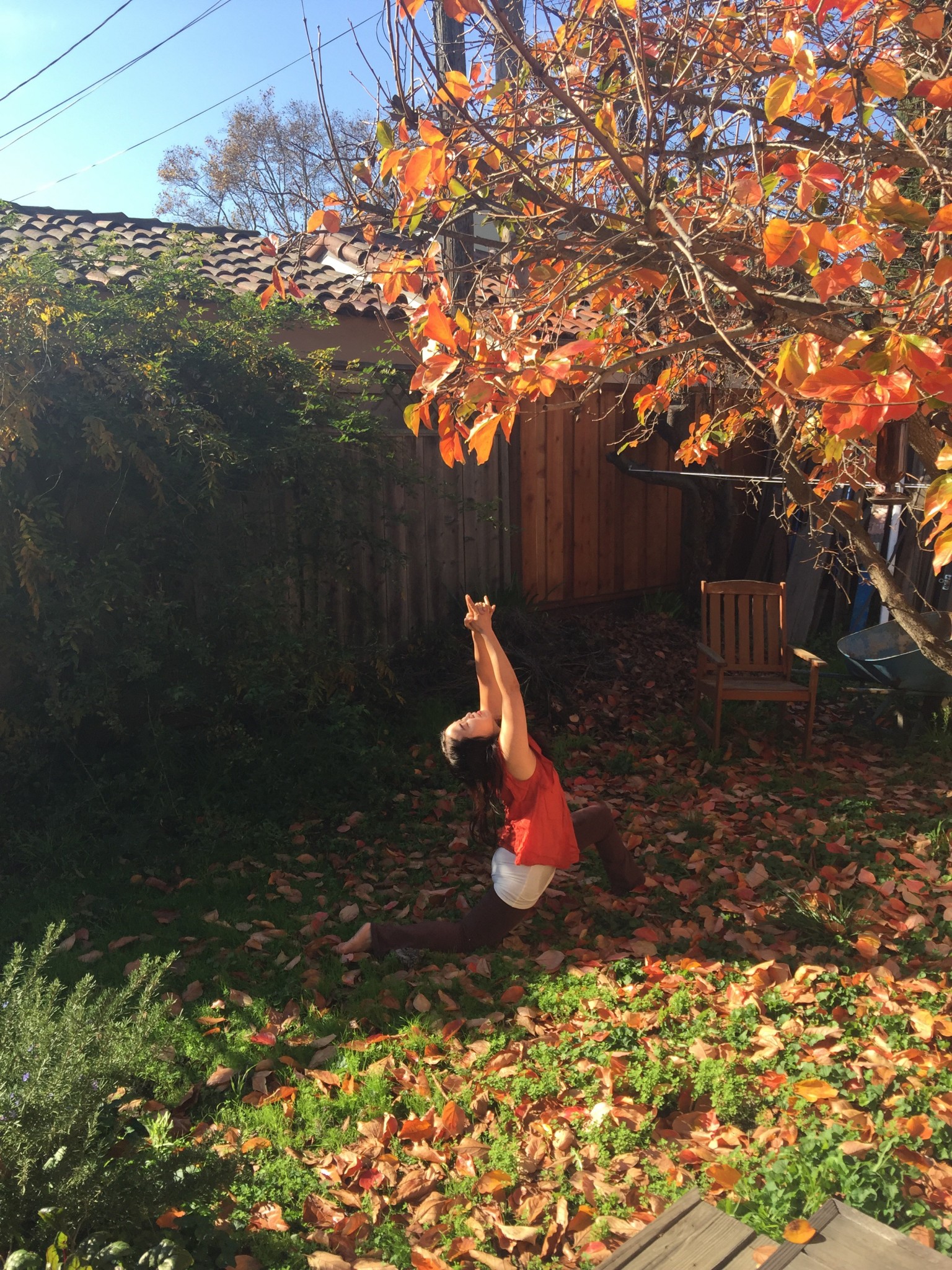
Beautiful Autumn sky beyond the persimmon tree. Kali mudra points up and up harnessing the Shakti, the energy as we tap into our inner radiant source.
Usually a vinyasa flow style before noon but weaving in some yin so to find that nuanced stillness; soaking up the grounding energy from the earth; filling up with light from above… Between the Heaven and Earth where each of us reside.
Postponing raking the leaves as this ground covering feels good. It’s better than magic carpet with the rustling sounds and the cool feel on your bare feet. Natures carpet doing its magic for this yogini Earthing on Thanksgiving day – my own practice to slip in between teaching and the gathering. So much to be grateful for. Thank you for this day of abundance. Namaste.
VERY VERY GENERAL rules of thumb – nothing like getting a professional to check with, so getting MD, Chiropractor, or physical therapist to consult would be best. THEN check in with a yoga therapist to work with for a long term practice to stick to:
– forward folds help with spinal stenosis
– flexion hurt? suspect herniated disc or sacroiliact joint derangement
– Twist one side OK but not the other – herniated disc suspect
– Back Bend really helps? bulging or herniated disc suspected.
– Pain with back bends? Spinal stenosis or spondylolisthesis …
Again, refer to see a good physical therapist, chiropractor, those lovely professionals who specialize in that area … we do not diagnose but provide the “soft” care not available elsewhere.
* Some sample of asanas/poses helpful for “general” lower back discomforts; again, please be cautioned that this is GENERAL and not customized for anyone’s particular condition:
– child’s pose
– sphinx
– seal
– upward dog
– downward dog
– careful now – camel
– locust
– wheel
– pigeon (for sciatica provided you don’t have a knee issue)
Mostly backbends and forward bends with care — gentle and subtle to start and see, feel, and report back.
 We will delve into this kosha model next … it’s another way of knowing yourself better so that we may better take care of ourselves better. Peeling layer by layer to get to the core; analogy of the kosha model but here, I am talking about superficial muscles to inner core muscles and tissues that wraps around and envelopes our organs… Sweet.