Categories
Anything Cute Beautiful People Beautiful Things Yoga

Manupura Chakra

“Manupra” means “Jeweled City” and points to your solar plexus in your astral body. From the solar plexus, the region extends down to your your navel-belly area. It is our third chakra, an energy vortex, a third stopover on a passage, as our Kundalini (Shakti/prana/Chi/life-force energy) rises up our spine from the base root chakra, Muladhara. The color evoked at this third focus stop in the kundalini (Shakti energy) ascension is yellow … bright yellow like the sun.

And as evoked by such color, the element associated with this energy vortex is … Fire. Thus, it is also known as the Fire or Sun Centre. The fire element manifests in the body as heat in the Solar Plexus. The Manipura Chakra is the centre of vitality, a command center that controls our energy balance essential to our health. This Chakra is powerful like a magnet, attracting Prana or Chi, life force, from the Cosmos.

Regulating the digestive fire, blockages in this centre can cause many health problems such as digestive disorders, circulatory disease, diabetes and fluctuations in blood pressure. In contrast, when the energy of this Chakra flows freely, then we are assured this constant supply of vitality – that bestows balance and strength in our whole being.

Symbolically, Manipura Chakra is often pictured as Lotus with ten petals. These represent the ten Pranas, the vital forces, which control and nourish all functions of the human body. An additional symbol of the Manipura is that of a triangle with its tip pointing downward. This indicates the Apana spreading of energy, growth and development. Activation of the Manipura Chakra frees one from negative energies and purifies and strengthens one’s vitality.

Here’s a beautiful necklace that arrived from Munich, Germany 2 weeks ago that I just love…

Prom_IMG_7122

Prom_IMG_7125

Prom_IMG_7126

Prom_IMG_7127

Here’s a description of this treasure:

“Jiva” and “Mukti” means liberated + soul. Embrace this aim with a reversible sterling silver pendant stamped with “jiva” on one side and “mukti” on the other. The chain is handmade in India and features diamond cut crystal accent beads and a large 7mm square Citrine endpoint. Designed to be worn in two ways: as a long single chain, or clasped close to the neck with a dangling accent towards the heart.”

Lizzie Lasater

I fell in love with this necklace when I first saw it and read the description … the reversible touch is so cool, such an expression of the dualistic world we place ourselves in … but the pendant messages are “back to back”, the two are combined into one …ONENESS and it further links and pairs with the matching Jive+Mukti bracelet. For me, the Citrine accent is always going to be dangling towards the heart – my anahata chakra, full of love… as our soul, Jiva , one’s immortal essence, is housed in every heart.

Lizzie grew up with yoga (after all, her mom is that Judith Lasater…one of first American woman disciple of BKS Iyengar) and while she had one of the best teachers at home, Lizzie formally trained, her profile reads, with much revered Maty Ezraty. Lizzie now teaches in Germany, restorative yoga, a rejuvenating practice her mother helped to popularize from the Iyengar teachings, the therapeutic healing part of the great expanse of teachings, she felt was much needed in the modern world. Life her mom, Lizzie is creative and soulful… a Jiva who expresses her free and creative spirit through the beautiful designs… judging from all the beautiful jewelry she designs, her style is very elegant in a simple Zen ways. Check out her website – simple and elegant designs I find so beautiful.

In fact, I can imagine from her jewelry designs that her yoga practice must also be the same; crafted and sequenced in elegance with beautiful “lines” reflecting her creative spirit.

Citrine – an appropriate stone for me now as I was just embarking on how I can better bring about abundance… To do away the fear of scarcity, shortages and deficiencies – the feelings of small losses in our lives and sometimes there’s just “not enough”. Learned that Citrine is also a stone known as “success stone” with key words of “success, abundance, personal power” … and the fact that it dangles towards the heart … signifying all that success and abundance through faith in personal empowerment is not for ego’s sake but for … the heart … for love. I think it’s going to be one of my amulets going forth.

*** Fun “Facts” ***

Citrine is a solar plexus chakra stone used metaphysically to increase, magnify and clarify personal power and energy. This increased personal power can be used for the focused intent of the individual, as it brings will power as well.

Citrine is a fabulous stone to use to combat negative energy of any kind by breaking them up and dissipating them. It is helpful to clear unwanted energies from the environment, whether it be home, office, car, or other space indoors or out. Family issues caused by negative energies can also be cleared for resolution with citrine. Citrine is also a stone that brings hope. Since citrine eliminates negative energies, it is good for protection in general and helps bring stability energetically.

Citrine also does not absorb any negative energies from its surroundings, and thus never needs energetic clearing.

Because citrine can clear negative energy and influences from the aura, it is useful for meditation, psychic awareness, and spiritual development. By removing unwanted energies it paves the way for this spiritual and psychic growth. It is also excellent for dream recall and dream work.

excerpt from meanings.crystalsandjewelry.com
In other words, it’s just what I was looking for …a little treasure – and of course, I find “it” through my teachers.

Categories
Beautiful Places Healthy Food

North Berkeley: throwback mode still…

A weekend last month … Post Sunday morning yoga has led to me rambling down memory lane … Not so many yoga studios back then so just doing Hatha yoga at University Ave YMCA … no music, no frills. So happy with so little to nothing … bare bone class … I wonder if that’s changed also …
sm_IMG_6258 Can you believe I used to live here on the first floor 3BR shared with 2 other roommates way back when? Not this nice of a paint-job back then – everything around the neighborhood has transformed into this upscale hip, almost chic, “gourmet ghetto” … I lamented ever leaving this place …it’s just so convenient with Cheese Board around the corner and … brings back memories. Spent some of the best times of my life here … (notice it appears to be all fond foods related?)

sm_IMG_6221Ha ha ha

sm_IMG_6228 Love their simple healthy food …(almost) just like home:)

sm_IMG_6264
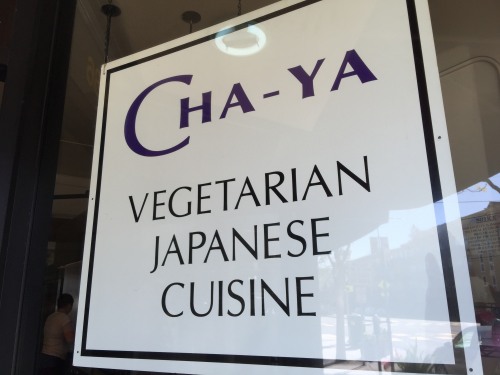
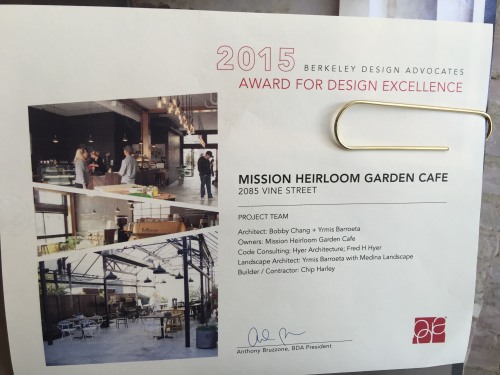
Can’t believe either that this very hip new cafe has replaced what used to be a very sort of run down vegetarian Chinese restaurant that was across the street from where I lived … it is a very weird feeling to revisit where you spent your young and hopelessly idealistic days … The flagship Pete’s Coffee is still at the corner on Walnut Square and …
sm_IMG_6236 OMG – Juice Bar Collective – I love this place… it hasn’t changed … still a hole in the wall – so relieved… it’s pretty much the same.
sm_IMG_6329 Yes, still the same menu – Polenta with black beans and salsa (rather than cheese for vegans) … yummy – tastes still the same, yes:) What a relief.

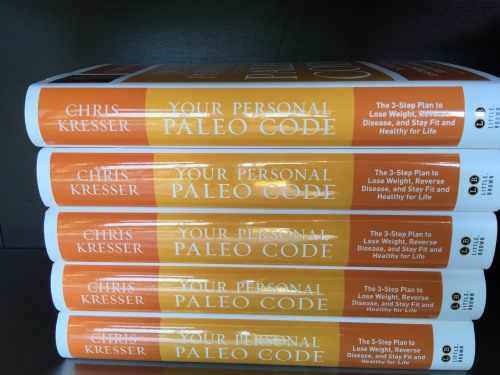
These and only these books were showcased at Mission Heirloom Garden Cafe … puzzled. Isn’t Paleo diet about eating like the Paleos did – which included meat for the hunting tribes but not for non-hunting tribes. I feel more connected to my ancestors who ate no four-legged mammals and supplemented the vegetables and grains with fresh seafood from the ocean that surrounds that beautiful home country. (I am sorry about the whales … ignorance leads one to do stupid things – I recall eating some whale … it was in the elementary school lunch program menu … ahhhhgh I am sorry, I didn’t know better and each student was required to finish everything served. Yet, there’s also a belief that as long as you eat what’s served with gratitude for the life sacrificed before you, lovingly prepared, all food is nourishing, becoming part of your flesh, the divinity within honored… )

sm_IMG_6275sm_IMG_6297sm_IMG_6298sm_IMG_6296sm_IMG_6306


Paleo Code? Can you take the meat out? Can this be plant based? And speaking of ancestors, different race/groups relative to their land, the climate they are placed in, may have a very different food culture. Wonder if this code takes that into consideration… i.e., about diversity. I recall deep fried grass hoppers in Thailand (did not eat them but heaps of them at street vendors…) so … wonder.

Here’s an excerpt from Nipponia to that point:

“Any history of food in Japan has to include the many centuries when eating the meat of four-legged animals was forbidden. The first law prohibiting meat eating was issued in the year 675, a little more than 100 years after the arrival of Buddhism.
In the 7th and 8th centuries, when a new emperor came to the throne he would issue an Imperial edict forbidding meat consumption. This was because, according to Buddhist belief, killing animals is wrong. The fact that these edicts were issued from time to time indicates that some found it hard to give up eating meat. But by around the 10th century just about everyone had stopped eating it.
In China and the Korean peninsula, the Buddhist clergy were not allowed to eat meat or fish, but in Japan even ordinary people did not eat meat. This was partly because of Buddhism, and partly because even the indigenous religion, Shinto, considered that eating the flesh of animals was unclean.
But the rule extended only to meat from mammals, not seafood. Whales are mammals, but the common folk thought of them as big fish and there was no prohibition against killing and eating them. Wild birds were also eaten. There was a belief that chickens and roosters were messengers working for the Shinto gods, and their meat and eggs were not eaten until the 15th century.
The indigenous Ainu of Hokkaido in northern Japan depended considerably on food from wild birds, animals and plants, and deer and bear meat was an important part of their diet. In the far south, the Ryukyu Kingdom in the Okinawan islands was in a different jurisdiction and prohibitions against meat eating did not apply. People there raised pigs, goats and other animals and ate their meat. In mountainous areas on the main islands of Japan, people who made their living fishing the mountain streams would hunt wild mammals for their fur and medicinal properties, and eat the meat of what they caught. And others, hoping to cure some illness or build up their strength, might practice kusuri-gui (eating medicinal flesh of wild animals). But in spite of all this, animals were not raised for meat, and for many centuries meat consumption in Japan was remarkably low.
Like their neighbors in China and the Korean peninsula, the Japanese did not drink the milk of domestic animals, and the manufacture of dairy products did not occur until much later. It is no wonder, then, that preparing fish for the table developed into a fine art.”

Categories
Beautiful People Yoga

Monday Throwback

If I were to put some elements of this choreography in a yoga sequence for fun – would I be met with rolled eyes or … mirth? Things get too serious and intense sometimes. It’s just yoga – no wonder some flock to … Zumba ! for example. Where’s the fun? along the road on to transformation?
Actually love more her video on river boat going down the stream but… it was taken down…Isn’t UTUBE supposed to be a public domain?
This blog is a non-profit outlet (lol)…a travel log of a seeker on a journey to cultivate the extraordinary in the ordinary everyday…
https://www.youtube.com/watch?v=I-BIxL7gyYE
May need to just find a Karaoke box to get this out of my system …somethings Never End …the question is as always, can you ever schedule such a time to be “in a box” anymore? So trapped in an hour-glass, our daily structured schedule.

Those going ??? what does this have anything to do with YOGA … relating all back to it – the practice of “Prayyahara” is one of the eight limbs of Ashtanga yoga:

V. Pratyahara (Control of the Senses)

Pratyahara means drawing back or retreat. The word ahara means “nourishment”; pratyahara translates as “to withdraw oneself from that which nourishes the senses.” In yoga, the term pratyahara implies withdrawal of the senses from attachment to external objects. It can then be seen as the practice of non-attachment to sensorial distractions as we constantly return to the path of self realization and achievement of internal peace. It means our senses stop living off the things that stimulate; the senses no longer depend on these stimulants and are not fed by them any more.

In pratyahara we sever this link between mind and senses, and the senses withdraw. When the senses are no longer tied to external sources, the result is restraint or pratyahara. Now that the vital forces are flowing back to the Source within, one can concentrate without being distracted by externals or the temptation to cognize externals.

Pratyahara occurs almost automatically when we meditate because we are so absorbed in the object of meditation. Precisely because the mind is so focused, the senses follow it; it is not happening the other way around.

No longer functioning in their usual manner, the senses become extraordinarily sharp. Under normal circumstances the senses become our masters rather than being our servants. The senses entice us to develop cravings for all sorts of things. In pratyahara the opposite occurs: when we have to eat we eat, but not because we have a craving for food. In pratyahara we try to put the senses in their proper place, but not cut them out of our actions entirely.

Much of our emotional imbalance are our own creation. A person who is influenced by outside events and sensations can never achieve the inner peace and tranquility. This is because he or she will waste much mental and physical energy in trying to suppress unwanted sensations and to heighten other sensations. This will eventually result in a physical or mental imbalance, and will, in most instances, result in illness.

Patanjali says that the above process is at the root of human unhappiness and uneasiness. When people seek out yoga, hoping to find that inner peace which is so evasive, they find that it was theirs all along. In a sense, yoga is nothing more than a process which enables us to stop and look at the processes of our own minds; only in this way can we understand the nature of happiness and unhappiness, and thus transcend them both.

– William J.D. Doran

At first read, “Withdrawal” from what’s “nourishing” does not sound right, right? It’s more about outside triggers and stimuli that we are withdrawing from, which leads to a more NOURISHING care of what’s within us – it’s about the content of our vessel, not just the vessel, it’s that content we tend to neglect… the content that fills and enriches our vessel, our lives. It’s so much about the practice of restorative yoga that prepares us better. Judith as always guides us well in our understanding of this concept of “Pratyahara” from a perspective of a yogini who is in this world fully engaged. Here is the illumination. We are not checking out and taking off to retreats because we are needed around here. It’s in the ordinary everyday that’s lived with grace.
Namaste.