Categories
Beautiful Rituals

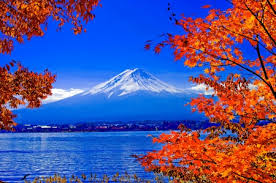
Postcards from Mountains…

It’s intuitive – came up with this meditation practice when I realized my name is about nature – as I was bestowed with a name that literally means – “the Ocean & the Mountain”, feeling a bit Native-American-ish, it’s also very Japanese whose culture and tradition almost has an obsessiveness about its admiration for nature while its economy must always striving to be at the forefront of technology. It’s that longing to go to that place, there’s that calling from the mountains and the oceans… and I am not alone – for all of us – but most of us just can’t get there too busy in our daily lives filled with pressures of deadlines and productivity. Ignoring call of the “wild”, blazing ahead or spinning lost or floating about aimless … Or that we are too busy caring for everything but what’s most important – so this practice takes you back to a place where your prana is recharged – that place of nature within – so that you can see more with your creative intuition, your innate instincts.
images

yama

Centered and Grounded,

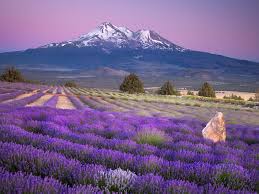
Visualize yourself as a Mountain. that “Yama”, the summit reaching for the celestial heavens, Up and up
while your seat is cradled and supported, as your roots grow deeper and deeper into this Mother Earth.
Like a mountain, you are firmly grounded.

Solid, Noble, Authentic…Natural and all times, at ease.
with eons to look back on the past, but always present.
There have been many nights of
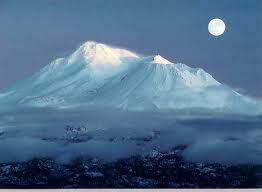
Darkness Of New Moon – then seeing the sliver of light, sliver of crescent moon, then half, full, then waning back to
… crescent moon – the perpetual cycle…
There have been many days of
Brightness, seeing the sunrise, sunset,
then again moon above and the stars, some nights
meteor showers falling.
seeing every weather patterns from sunny blue skies
to stormy nights and blizzards from

time immemorial.

And still here, with grace,

firmly rooted into the earth and sitting tall, it’s summit, your crown of the head reaching up and up…

mountain2

mountainmoon

Let us be a here, present, solid and noble like a mountain…
here and now, sitting still
with inner gaze infused with soft light
seeing even more clearly with each breath…
inner landscape bathed in soft light,
becoming even more lucid with each soft breath.

sitting still
feel the warm glow radiate from your core to reach the entire heart center.
soft, softer, softest reaches of your entire being, upright and

awake.

Let’s just be.

Here

and

Now.

****
Namaste – Have weaved together a completed version of this meditation and few others to share upon request but this partial script (hate to use this word – things scripted is so… how shall I say… fake, artificial, unauthentic?) gives you the idea and steps – Always welcome to share this with anyone or any meditation groups you lead – spread the love – and let more peace prevail within for each and everyone of us. Let me know what happens.

ah, and next time you see me, you can call me “Mountain”… oh, wait, that’s just half of me – smile –
Then call me “Ocean”…”Sea”-san? “Yama-san” Lost in translation… lost in words.

In honor of Indigenous People’s Day – for the rest of the country, it’s Columbus Day holiday perhaps but in Berkeley, it’s honored as Indigenous People’s Day…Americas’ Indigenous People would be Native Americans or loosely and incorrectly called Indians. ‘American’ Indians – In honor of their wisdom.
Categories
Uncategorized

Prana-Yama

fujiakimountain

Eight limbs of ashtanga yoga or Raja yoga or any yoga from my perspective…are as follows:

Yama – code of conduct, self-restraint…discipline.
Niyama – commitments to practice, study and devotion
Āsana – integration of mind and body through physical practice.
Prāṇāyāma – regulation of breath for focus and healing.
Pratyāhāra – abstraction of the senses, withdrawal of the senses.
Dhāraṇā – concentration, one-pointedness of mind
Dhyāna – meditation (quiet activity that leads to samadhi)
Samādhi – the quiet state of blissful awareness, superconscious state.

Why is Yama, first of the eight? It’s self-explanatory -Yama (restraints) consists of five parts:

ahimsa (non-violence) or love…
satya (truthfulness)
asteya (non-stealing)
brahmacharya (abstinence from temptations that does not serve you – or …no comment)
aparigraha (non-covetousness)

The five codes of yama lay down the prerequisites for elimination of fear, fear that prevents us from acts of courage and love,
prerequisites to attain a tranquil mind… easily said than practiced, of course. It’s a repetitive practice; at least an effort.

Maybe a bit Native-American-ish but very traditional Japanese name that contains the character “YAMA” … roots back to Shinto-ideas taking in ancient Vedic ideas possibly.

Yama does not mean code of conduct, restraint or discipline in Japanese but just simply means “mountain”…and now I see a connection…
When you practice Pranayama, as you sit “mountain”-like, you get to that place where you are no longer blowing in the wind, unrooted … rather you are SOLID, SECURE, and GROUNDED. Your head held high and proud … tranquility is felt. There is utter… SERENITY. Your prana is not disturbed or leaking but vibrant and well contained – locked in with your bandhas protecting your prana from escaping. Prana, that light that you have within, that shines in the darkness. Prana, that inner-heat, the glow that you have within that warms the heart. Prana, that flow you have within that cascades into that glistening and shimmering pool… the source that nourishes our spirit.

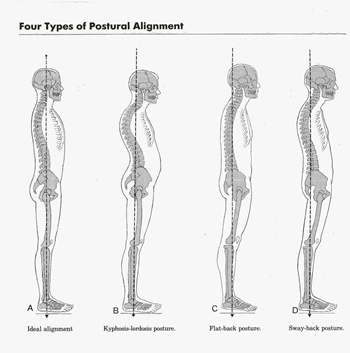
In Tadasana – Mountain Pose:

tadasana

Categories
Uncategorized

OMMMMMMMM

cookiemonsterom

The techniques of yoga are methods of purifying the nervous system so that it can reflect a greater degree of consciousness and our lives can become an increasingly positive force in the world…. If these techniques are correctly practiced, the whole nervous system in revitalized – the body enjoys better health and more energy, the rested mind is freed from the burden of past experience, and perception is restored to its primal freshness.

– Alistair Shearer, Introduction to The Yoga Sutras of Patanjali

AND THAT’S why Restorative Yoga works for me. Thank you for keying in on this Teacher Judith.

When I went to Restorative Yoga training with Judith Lasater, I underestimated thinking that it’s about R&R and napping away to restoration. I was foolish – You are sweaty from handling all the props and folding all the blankets “correctly” and flipping off the chair! hahaha and she did an asana practice where I thought ??? where IS that ankle I am supposed to grab and extend to where? … what? the other side??? Anyway – let’s get our nervous system tuned up so we can experience the lusciousness to the fullest in this life.